
10 common mistakes that make fruit and vegetables rot faster and how to avoid them
→
Here's how to fix the 10 habits most likely to be costing you fresh produce every week
- How to avoid produce spoilage in the fridge
- How to avoid rotten fruit in your fruit bowl
- Sustainable solutions: Shelfy and Vitesy Fruit Bowl
How to avoid produce spoilage in the fridge
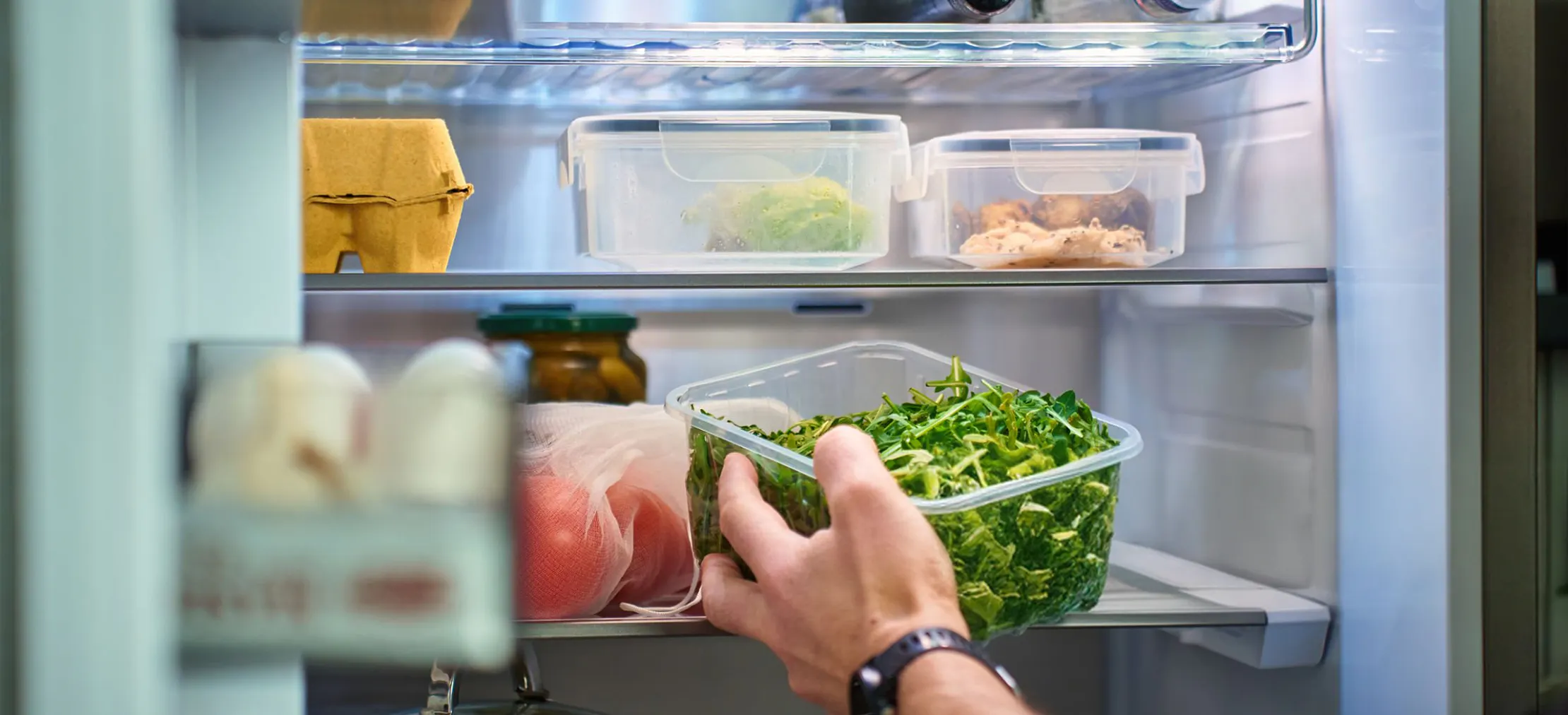
Your refrigerator is a complex environment. Storing everything together without considering humidity and airflow is one of the quickest ways to see your produce spoil.
You buy fresh produce with the best intentions, but often find it overripe or spoiled just a few days later. This happens not because you bought too much or forgot about it, but because of common storage habits that unwittingly accelerate the rotting process. Below are the 10 most frequent mistakes we make in the kitchen and how you can easily avoid them to keep your produce fresh longer.
1. Piling everything into one bowl
As fruit ripens, it releases ethylene gas, a natural plant hormone that signals everything nearby to ripen faster too. One banana in a bowl of apples isn't a myth, it's a documented phytochemical process. The more fruit you group together, the more ethylene accumulates, and the faster everything breaks down.
How to avoid it: separate high-ethylene producers (bananas, apples, avocados, pears) from more sensitive fruit, or use a system designed to actually manage ethylene instead of just shuffling the problem around.
2. Washing produce before storing it
Moisture is mold's best friend. Washing fruit and vegetables before putting them in the fridge or the bowl creates condensation, and condensation creates the ideal conditions for mold spores to activate and spread.
How to avoid it: wash right before eating, not before storing. If you must wash in advance, dry every piece thoroughly.
3. Ignoring the humidity in your crisper drawer
Many people assume the fridge is simply "cold, so it's fine." In reality, the internal environment such as temperature, humidity, airflow, have a huge impact on how long food lasts. A drawer that's too humid encourages mold; one that's too dry dehydrates leafy greens.
How to avoid it: don't overcrowd drawers and let air circulate. Devices like Shelfy monitor temperature and door openings and actively work on the air inside your fridge to keep conditions optimal.
4. Never cleaning your fridge (or your fruit bowl)
Mold and bacteria don't appear out of nowhere, they build up over time on surfaces, shelves, and drawers. A single moldy piece of fruit, left too long, can spread spores to everything around it.
How to avoid it: clean food-contact surfaces regularly. Some devices, like Shelfy, use washable photocatalytic filters that eliminate 99% of bacteria and cut odors by 80%, with nothing to replace.
How to avoid rotten fruit in your fruit bowl
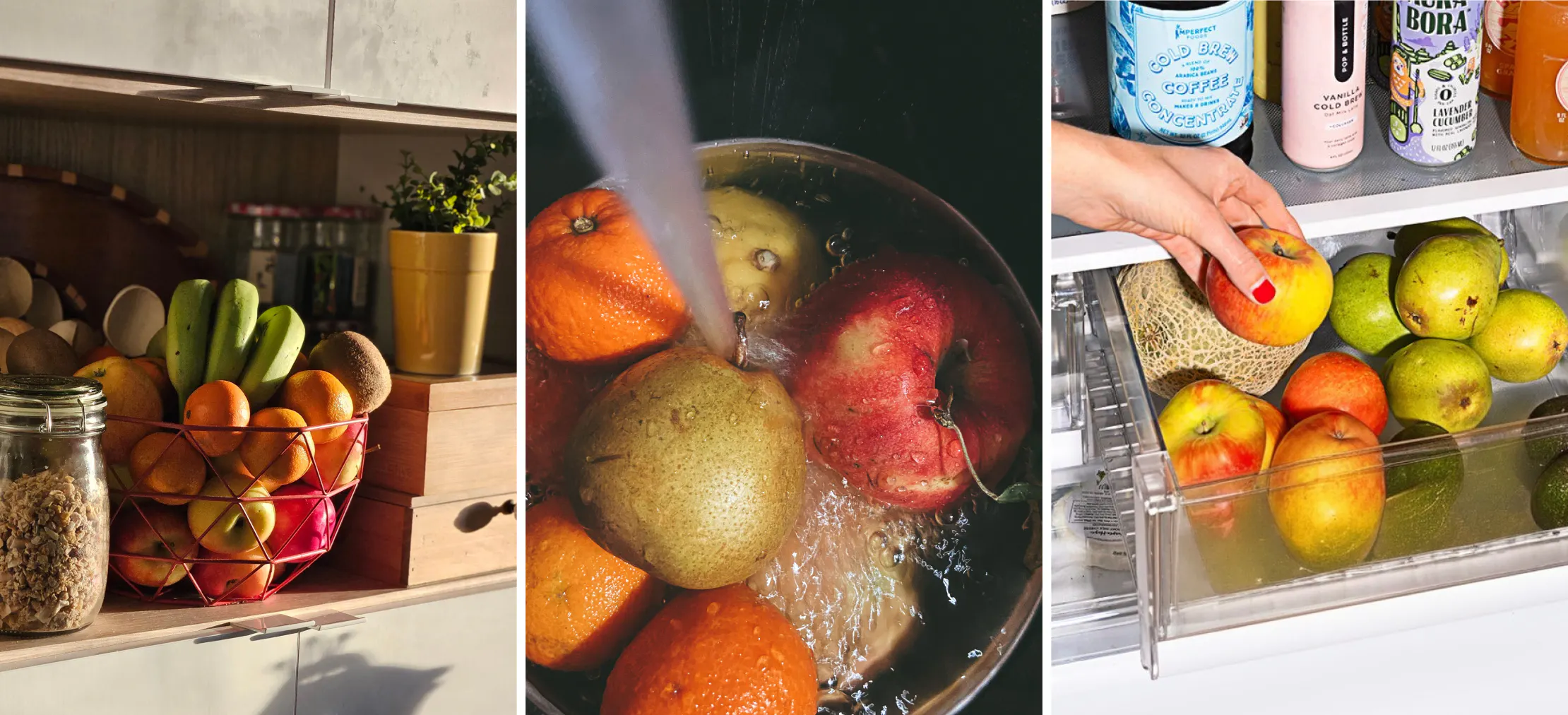
Many fruits belong outside the fridge, but leaving them in a simple decorative bowl can trap ripening gases and moisture, leading to premature rot.
5. Refrigerating everything, indiscriminately
Not all produce likes the cold. Bananas, avocados, mangoes, tomatoes, and most stone fruit are chilling-sensitive: low temperatures disrupt their ripening chemistry and damage flavor and texture in ways that are largely irreversible.
How to avoid it: learn which foods actually belong in the fridge and which don't. As a rule of thumb, fruit that continues to ripen after harvest should stay out until it's fully ripe.
6. Treating the fruit bowl as a purely decorative object
The classic fruit bowl is a beautiful object that, in most cases, does absolutely nothing to protect your fruit. No ventilation, no humidity control, no ethylene management: the fruit just sits there, exposed to its own ripening gas, which accumulates in the bowl's microenvironment.
How to avoid it: choose a system built for preservation, not just aesthetics.
7. Relying on disposable ethylene-absorber sachets
Ethylene absorber sachets work through passive adsorption: they trap some gas molecules, but they saturate quickly at room temperature and stop working entirely once full. The result? You're throwing away something every few weeks that was supposed to reduce waste in the first place.
How to avoid it: look for solutions that actually convert ethylene rather than just trapping it, so there's nothing to replace.
8. Storing leafy greens without managing humidity
Lettuce, spinach, and other leafy greens lose water fast if the air around them is too dry, but they rot quickly if left wet inside a sealed bag. It's a delicate balance that needs to be actively managed, not ignored.
How to avoid it: wrap greens in a slightly damp cloth or use containers designed to regulate humidity, and refresh the water or cloth regularly.
9. Underestimating the role of air circulation
When fruit and vegetables sit crowded together with no airflow, the moisture they release during ripening concentrates in one spot accelerating rot and mold growth exactly where pieces touch each other.
How to avoid it: spread produce out, avoid overcrowding storage containers, and favor objects genuinely designed with airflow architecture in mind.
10. Using storage tools that were never designed to prevent waste
A classic fridge drawer and a decorative fruit bowl have one thing in common: neither was actually engineered to slow down spoilage. They hold food, but they don't do anything active about ethylene, humidity, or airflow, the three factors that actually determine how fast produce breaks down. That gap is a big part of why a third of all fruit bought globally is never eaten. Not because people are careless, but because the objects meant to store it were never built to protect it.
How to avoid it: upgrade the tools, not just the habits. A system engineered around the actual science of spoilage will outperform good intentions every time.
Sustainable solutions: Shelfy and Vitesy Fruit Bowl
After watching these same problems play out in thousands of kitchens, Vitesy built two complementary products: one for the fridge, one for the counter.
Shelfy: the smart fridge purifier
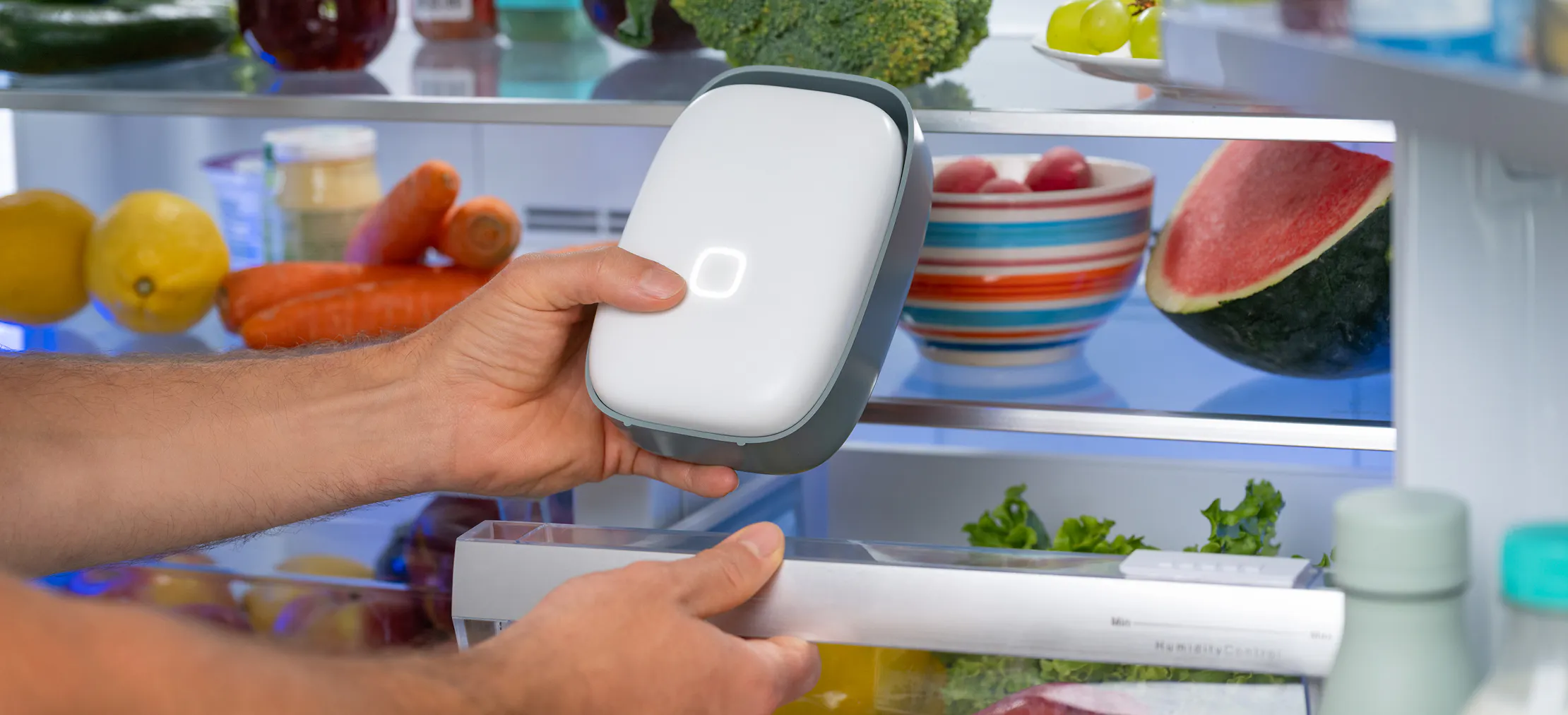
Shelfy is the smart device that works directly on the air inside your fridge. Using safe, ozone-free photocatalytic technology with blue LED light, Shelfy:
- Keeps fruit and vegetables fresh up to 2× longer, extending shelf life by up to 12 extra days under specific conditions
- Eliminates 99% of bacteria, cuts odors by 80%, and slows mold growth
- Uses a washable photocatalytic filter that does not need to be replaced
- Works with or without the app: three modes (Eco, Crisper, Performance) selectable via a single physical button
- Pairs with the Vitesy Hub app to monitor temperature, door openings, filter cleaning reminders, and personalized storage tips
Testing shows households using Shelfy can reduce food waste by 40–60%, saving an estimated €455 a year on grocery spending.
Vitesy Fruit Bowl: the same mission, outside the fridge
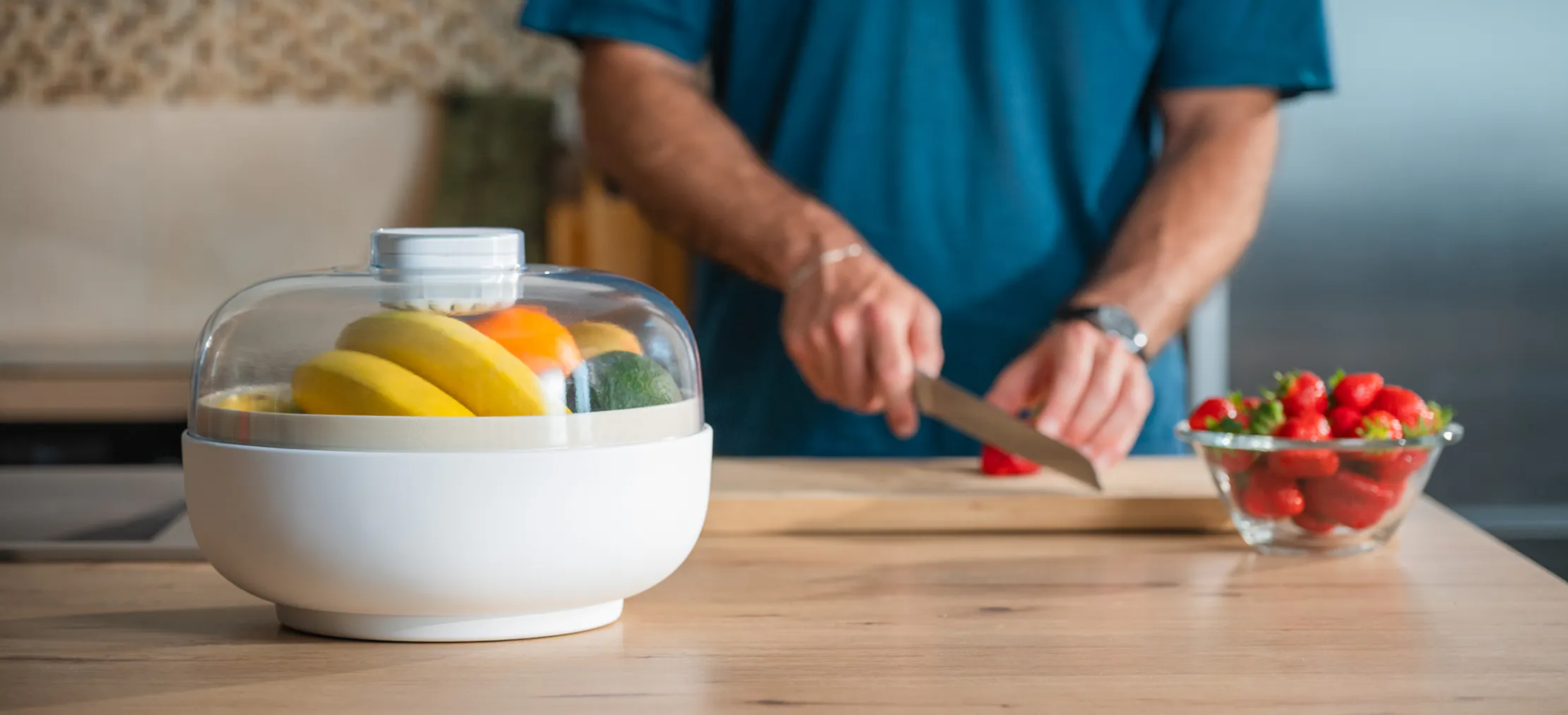
While working on Shelfy, we kept running into the same question from the other direction: if bananas, avocados, mangoes, and tomatoes shouldn't go in the fridge, what's actually protecting them once they're left out?
The answer, most of the time, is nothing. So they built one for the kitchen counter, inside the one object nobody had ever seriously thought to improve.
The Vitesy Fruit Bowl, now available on Indiegogo, isn't an electronic device, no app, no power cord, and no subscription. It's a physical system built around three elements working together:
- Catalytic filter: unlike passive ethylene-absorber sachets, it chemically converts ethylene into CO₂ and H₂O continuously, without ever saturating
- Ventilated architecture: ventilation holes in the base, a wavy tray that lifts fruit off the bottom of the bowl, and slots in the lid create continuous airflow directed toward the filter
- Humidity management: constant air movement prevents moisture from concentrating, reducing the conditions mold needs to thrive
In internal testing, fruit in the Vitesy Fruit Bowl stayed at peak freshness up to 2× longer than in a conventional bowl, bananas for example, remained perfect after 11 days, roughly double the typical window before browning.
All of this with no electricity and no maintenance, in a design made to actually earn its place on your counter.
Most food waste doesn't come from carelessness, it comes from everyday habits nobody ever explained, and from the lack of tools actually built to solve the problem. Whether it's the fridge with Shelfy or the counter with the Vitesy Fruit Bowl, science can be the difference between throwing food away every week and enjoying it down to the last bite.


